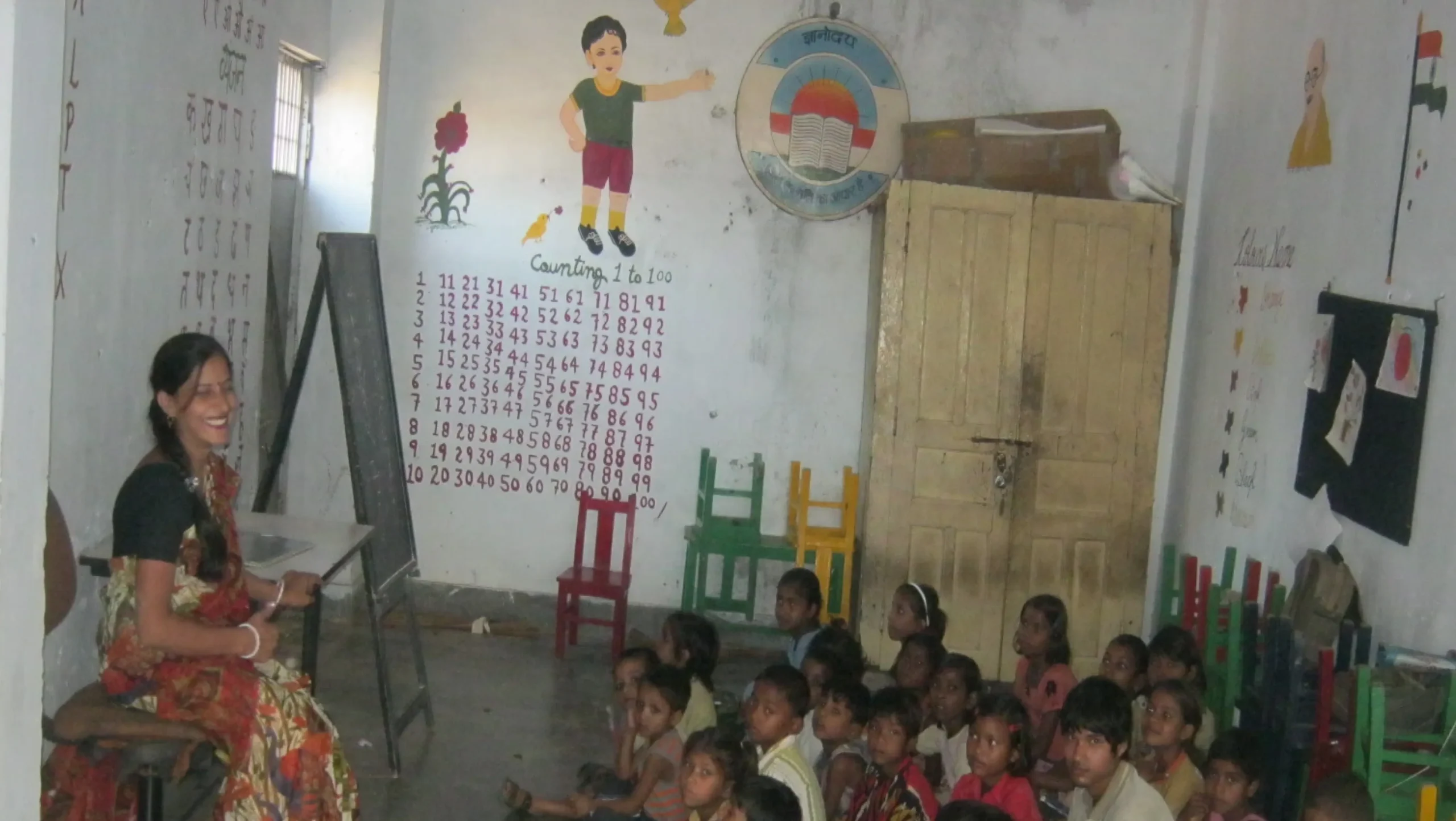
India has made significant progress in expanding access to education. Policies have been designed to ensure enrolment and improve infrastructure. Yet a gap continues to exist between intent and implementation.
This gap is most visible in communities with limited access to opportunities.
While schools are accessible, learning outcomes often remain inconsistent. Classrooms may include students with varying levels of understanding. Teaching methods may not always address these differences effectively.
As a result, children may progress through grades without developing strong foundational skills.
This highlights the need to focus on learning quality as much as access.
Bridging this gap requires a collaborative approach.
Schools, communities, and organisations must work together to create environments where learning is consistent and meaningful. Teachers need support and resources. Students need individual attention. Families need to be engaged in the process.
At Gyanoday, efforts are directed towards strengthening this connection between policy and practice.
By addressing gaps at the ground level, it becomes possible to ensure that education delivers on its promise.